
A lmost every nonprofit leader has felt miles away from reaching their fundraising goals at one point or another. Grant funding can be the essential boost needed to close that gap. However, when you’re competing against a number of other organizations for the same limited resources, the challenge is ensuring your application actually catches a funder’s attention.
To succeed, your grant application needs to be a data-backed, human-centered narrative that proves your organization is a worthy investment. In this guide, we’ll show you how to make your application just that!
1. Align Your Application with the Funder’s Core Values
Learn Grant Writing describes the grant application process as a “one-on-one targeted pitch to a funder.” You’ve vetted grant opportunities to find funders whose mission and goals for impact align with your nonprofit’s projects. As such, your nonprofit should tailor its grant application to the funder’s mission.
Explicitly acknowledging the funder’s priorities is an opportunity to emphasize how your organization aligns with their core values and mission. For example, let’s say the funder follows a participatory grantmaking model, engaging the community in funding decisions. In this case, your grant application should highlight your existing partnerships and dedication to hearing community members’ perspectives.
Other ways to demonstrate alignment in your application include:
- Using the funder’s specific terminology (e.g., “resilience,” “equity,” or “capacity building”) naturally throughout your narrative
- Referring to their recent research papers or public statements about the sector
- Showing how your project fills a specific gap in their current funding portfolio
- Highlighting any shared community connections or past successful collaborations
The goal isn’t to change your mission to suit a funder, but to find the overlap between what you do and what they value. When a funder sees your organization as a true partner, they’re much more likely to move your application to the top of the pile.
2. Connect the Grant to Your Long-Term Fundraising Plan
While grant funding can provide a significant source of support for your organization’s work, funders may be wary of feeling like your nonprofit’s only hope. Grantmakers want to know that you’ll use their funding wisely and remain sustainable after the grant period ends.
To address this, your application should explicitly connect the grant to your broader fundraising plan and financial health. Tactics for showing financial sophistication include:
- Describing how you plan to diversify your revenue streams over the next several years
- Explaining how the grant-funded project will eventually become self-sustaining or integrated into your general operating budget
- Sharing metrics like your donor retention rates to prove that your community is deeply invested in your long-term success
- Outlining how you will use the results of this grant to attract larger government or institutional awards in the future
Providing a strategic plan for growth shows the funder that you will leverage the grant as a strategic catalyst for your organization’s future rather than a temporary fix.
3. Incorporate impact data
Your proposal aims to show the funder why they should award your organization the grant. Why do you need this funding? What will you do with this funding? Answering these questions requires a two-fold approach: demonstrating your nonprofit’s need and how you’ve previously used funding to meet the community’s needs.
To stand out, your application should include a mix of quantitative and qualitative data that covers the various dimensions of your work. According to UpMetrics’ article on qualitative measurement, here’s how the two compare:
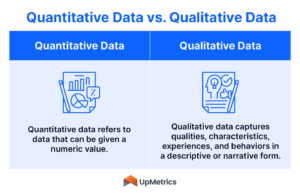
- Quantitative data is data with a numerical value.
- Examples: The number of people your organization serves, the number of partnerships forged with local organizations, etc.
- Qualitative data describes qualities, characteristics, experiences, and behaviors.
- Examples: Stories from beneficiaries or volunteers, photos from a recent volunteer event, etc.
Using both types of data allows you to prove your effectiveness while maintaining a human-centered narrative. However, to provide a truly comprehensive view of your impact, you must pull both types of data from all applicable sources across your organization.
For example, you may include donation amounts from your fundraising tools or quote a positive comment left on your latest social media post. Some nonprofit constituent relationship management (CRM) systems, like Salesforce, integrate all this data into one platform so you can pull it from a single source.
4. Showcase Transparency Through Your Digital Presence
While the grant application itself is vital, remember that funders will almost certainly conduct due diligence by researching your nonprofit. They’ll likely review your digital footprint, including your website and social media pages, to look for consistency between your proposal and what you share publicly.
For this reason, your digital presence should act as a living extension of your grant application. Ensure your website includes:
- A dedicated page that highlights your organization’s impact on social good through data visualizations and beneficiary stories
- An easily accessible digital version of your most recent annual report
- Evidence of transparent communication with your stakeholders, such as a blog or news section
- High-quality visuals showing your team and beneficiaries in action
If funders can see that you regularly report on both your successes and challenges, they will feel more confident in your ability to manage their funds responsibly.
The Bottom Line
Making your grant application stand out is about proving your organization’s value through a combination of rigorous data and authentic storytelling. Remember that the grant application is the start of a potential partnership. When you approach the process with a focus on alignment and transparency, you’re inviting a funder to join you in creating a better world.
About the Author
Stephen Minix, Sr. Director of Community at UpMetrics
 Stephen joined UpMetrics in 2015 for one reason: a unique opportunity to continue to uplift communities. In his role as Senior Director, Community Strategy, Stephen empowers partners to utilize their data to accelerate progress toward outcomes: informing all decisions, gaining new insights and telling their story to a wider audience. Stephen is passionate about building capacity at impact organizations as he has dedicated his life’s work to the advancement of youth and communities through education and development. He began his career by serving young people and communities in Southern California as a public school and public charter school teacher at Locke High School, coach, athletic director, administrator, district coordinator for afterschool programs and adjunct professor. He was recognized as the CIF Los Angeles City Section Athletic Director of the Year in 2015. Today, Stephen continues to be active in the community, serving as a Green Dot Public Schools Ambassador and an inaugural board member(board chair) for MENTOR California.
Stephen graduated from Pepperdine with a BS in Physical Education and a MA in Secondary Education. Stephen lives in San Diego, where he is married with three young daughters.